
Laid Off on an H1B in NYC? Your 60-Day Survival Guide
Laid Off on an H1B in NYC? Your 60-Day Survival Guide
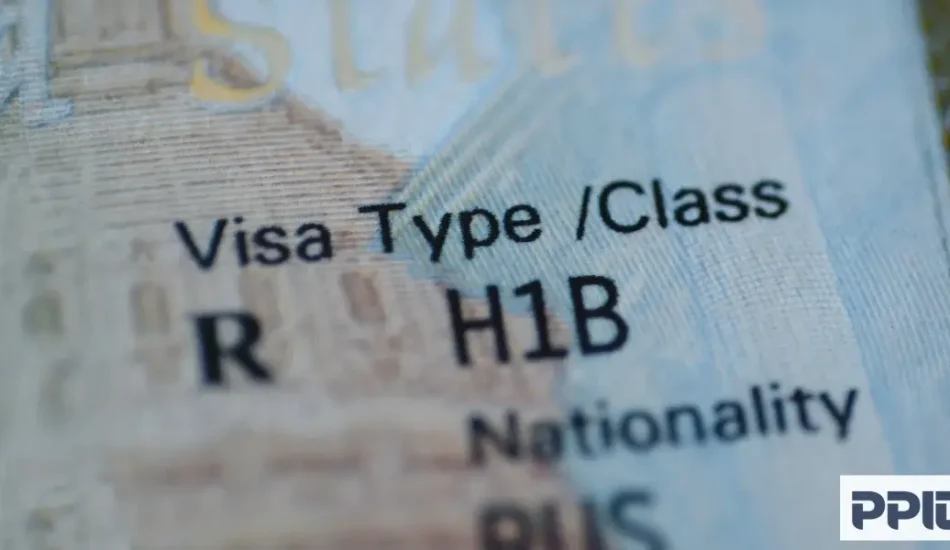
What Should You Do If You Get Laid Off From an H-1B Job in New York?
After an H-1B layoff, USCIS gives you a grace period of up to 60 days, or until your I-94 expires, whichever comes first, to take action before losing lawful status.
Within that window you can:
- Find a new employer willing to file an H-1B transfer petition.
- File Form I-539 to change to B-2 visitor status and pause the clock while you plan.
- Explore self-petitions like O-1 or EB-2 NIW if your professional record qualifies.
- Change to a dependent status such as H-4 or F-1 if you are eligible.
- Prepare to depart the country if no other option is viable within the timeline.
Every case is different — speaking with an immigration attorney can clarify your options before the clock starts running against you.
Receiving a termination notice when your immigration status depends on that job changes the landscape immediately. If you hold an H-1B visa in New York, real H-1B layoff options in NYC exist, transfer, change of status, self-petition, but every one of them depends on time.
This guide walks through how the 60-day grace period actually works, what realistic paths you can take within it, and the common mistakes that shrink your options before you know it.
Key Takeaways About the H-1B Grace Period in New York
- The 60-day grace period starts the day after your official termination date on payroll, not the day you are notified verbally.
- Severance pay can extend your official end date if the employer keeps you on active payroll during that period.
- A change of status to B-2 through Form I-539 can pause the clock, but it must be filed before day 60.
- Self-petitions like O-1 or EB-2 NIW do not depend on an employer and can run as a parallel plan while you look for work.
- The USCIS New York Field Office (26 Federal Plaza) handles high volume, and processing times run long.
Key Statistics About H-1B Layoffs
- USCIS confirms that a laid-off H-1B worker has up to 60 consecutive days or until the I-94 expires, whichever comes first, to maintain lawful status. Source: USCIS.gov.
- H-1B petitions (Form I-129) with premium processing under Form I-907 are typically adjudicated within 15 business days, according to USCIS.
- Form I-539 change-of-status adjudications at the New York Field Office can stretch several months. Review current data on the official USCIS processing times tool.
What Exactly Is the 60-Day Grace Period for H-1B Holders?
The grace period is a federal window, codified at 8 CFR § 214.1(l)(2), that lets H-1B holders keep lawful nonimmigrant status for up to 60 days after their employment ends. It starts the day after your final date on the employer’s payroll.
Within that window you can remain in the United States while searching for a new sponsor, changing status, or preparing to depart. Once the window closes, each additional day counts as unlawful presence and can affect future applications.
How Does Severance Pay Impact Your H-1B Status?
It depends on how the employer structures the payment. If you stay on active payroll during the severance period, receiving periodic paychecks as an employee, not one lump-sum exit payment, your official termination date can shift to the last day on payroll. That effectively extends the grace period clock.
A lump-sum severance payment typically does not extend your status. Before signing any separation agreement, have it reviewed; a one-line adjustment on how severance is delivered may buy you weeks before the 60 days begin.
Common Problems H-1B Workers Face After a Layoff
- Confusing the verbal notice date with the official termination date on payroll.
- Signing a severance agreement without reviewing the immigration impact.
- Approaching employers that lack H-1B filing capacity or experience.
- Assuming 60 days is enough time without activating a parallel plan from day one.
- Skipping premium processing on a transfer petition to save on the I-907 fee.
- Filing Form I-539 too close to day 60 and losing the change-of-status protection.
Our role is to identify which of these applies to your specific situation and act before they turn into a loss of status.
Key Laws and Federal Deadlines That Apply in New York
The federal regulation at 8 CFR § 214.1(l)(2) defines the 60-day maximum grace window. Your Form I-94 expiration date acts as a separate ceiling: if the I-94 expires before day 60, that earlier date becomes your deadline.
H-1B transfers are filed on Form I-129. Under the portability rule at INA § 214(n), you can begin work for the new employer as soon as USCIS receives the petition, provided the receipt lands before the grace period ends. Changes to B-2 are filed on Form I-539.
What Realistic Paths Can You Take Within the 60 Days?
Five options come up most often for H-1B holders in New York:
H-1B transfer to a new employer. The most direct path if you find a company with H-1B experience willing to file Form I-129 with premium processing. The petition must be received before day 60.
Change of status to B-2 (visitor). Form I-539 requests visitor status for up to six months. You must show a non-work purpose and enough funds to cover your stay. B-2 does not authorize employment.
O-1 self-petition (extraordinary ability). If you have awards, publications, media coverage or documented achievements in your field, an agent-based O-1 lets you self-sponsor. Premium processing is available.
EB-2 NIW (National Interest Waiver) self-petition. For professionals whose work has substantial merit and national importance. It is a path to permanent residence with no employer sponsor and no PERM labor certification.
Change to H-4 or F-1. If your spouse holds H-1B, L-1 or E status, you can change to H-4. If you plan to study, F-1 is an option. Both are filed with Form I-539.
H-1B Post-Layoff Paths: Quick Comparison
| Path | Key Form | Typical Processing Time | Work Authorized? | Main Requirement | Main Advantage |
|---|---|---|---|---|---|
| H-1B Transfer | I-129 (+ I-907) | 15 business days with premium | Yes, upon USCIS receipt (portability) | New employer with H-1B filing capacity | Keeps H-1B status without a gap |
| Change to B-2 | I-539 | Several months at NY Field Office | No | Non-work purpose + proof of funds | Pauses the 60-day clock |
| O-1 Self-Petition | I-129 (+ I-907, agent-based) | 15 business days with premium | Yes, after approval | Documented extraordinary achievements | Removes single-employer dependency |
| EB-2 NIW | I-140 | 6–18+ months | Only with EAD after I-485 filing | Substantial merit + national importance | Path to green card without sponsor |
| Change to H-4 | I-539 | Several months | Only with H-4 EAD (if eligible) | Spouse holds H-1B, L-1 or E status | Family-linked status while planning |
| Change to F-1 | I-539 | Several months | Limited (CPT/OPT after one year) | Admission to a SEVP-approved school | Educational path forward |
When Should You Talk to an Immigration Attorney?
Ideally the same day you receive notice —before you sign the termination letter or the severance agreement. Acting in the first week gives you room to negotiate how severance is paid, evaluate parallel paths, and file petitions with premium processing.
If two or three weeks have passed and you have not consulted anyone yet, the conversation is still worth having. Options narrow each day the clock runs.
Practical Guide: What to Do in the First Seven Days
Many H-1B holders find it useful to work through this concrete checklist right after the announcement:
- Request the official termination date on payroll in writing.
- Save copies of your last three Form I-797 approvals, your most recent I-94, and recent pay stubs.
- Do not sign the severance agreement until an attorney reviews it for immigration impact.
- Update your resume and target employers with a proven H-1B filing history.
- Gather evidence of professional accomplishments in case O-1 or EB-2 NIW is a realistic parallel option: awards, publications, press mentions, reference letters.
- Keep a written calendar with the official termination date and day 60 marked, so you do not cross the deadline by accident.
Ask PPID: Quick Questions About the H-1B Grace Period
Q: Can the H-1B grace period be used more than once? A: USCIS allows one grace period per authorized period of stay. If you used one after a prior layoff and lose employment again within the same authorization, a second full window may not apply. An attorney can review your I-797 history to confirm.
Q: Can I travel outside the United States during the 60 days? A: Departing during the grace period without a new approved H-1B petition typically ends your status. Reentry requires a valid visa stamp and an active employer petition. Ask before booking international travel.
Q: Does my spouse on H-4 lose status if I am laid off? A: H-4 status depends on the primary H-1B. When your grace period ends without a transfer or change of status, dependent H-4 status ends as well. Parallel Form I-539 filings can protect each dependent in your household.
H-1B Layoff Questions Answered by Attorneys
What Is the Success Rate of an H-1B to B-2 Change of Status? H-1B-to-B-2 change of status petitions tend to be approved more often when the filing shows a clear non-work purpose and enough funds to cover the visitor stay. USCIS does not publish official approval rates, but a well-documented case filed early inside the 60-day window has stronger odds than one filed at the last minute.
How Do You Find a New H-1B Sponsor Fast in NYC? Focus on companies with a recent history of H-1B filings. Public data from the U.S. Department of Labor shows which employers have submitted labor condition applications. Applying directly to recruiters familiar with immigration timelines moves faster than generic job boards.
Can an O-1 Self-Petition Be Approved Within 60 Days? With premium processing under Form I-907, USCIS adjudicates O-1 petitions within 15 business days of receipt. Preparing the evidence package takes longer than the adjudication itself, so gathering achievements, expert letters and consultation agreements in week one is what makes the timeline realistic.
What Happens If I Take a Contractor Role During the Grace Period? Working as a 1099 contractor while in H-1B grace status is not authorized and can affect future filings. Only employment under a newly approved H-1B petition —or another specific work authorization— is permitted within the 60-day window.
When the Clock Runs, Every Day Counts
Getting a layoff notice with an H-1B in hand is a moment where the decisions in your first seven days shape what is possible in the next fifty-three. Reviewing the severance structure early, taking an honest look at your professional record, and running a parallel plan between transfer search and self-petition can change the outcome.
Our team at 250 Broadway in Manhattan has guided professionals in tech, finance, healthcare and creative fields through parallel paths that combine H-1B transfers with B-2, O-1 or EB-2 NIW plans. We speak Spanish, Chinese, Bulgarian, Russian, Hindi, Punjabi, and more, so you can discuss your case in the language you think in best.
Call 212-233-8100 to schedule a consultation with our New York immigration team. The earlier we review your timeline and documentation, the more room there is to build a plan that fits inside the 60-day clock.